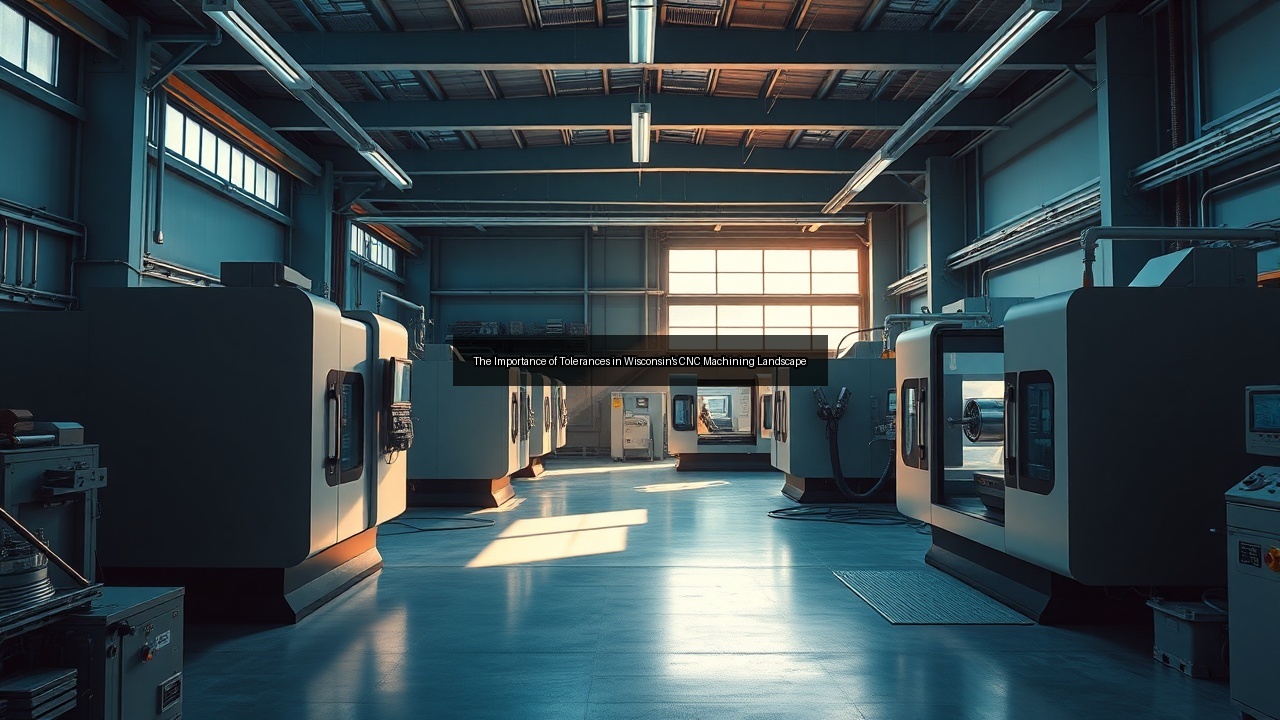
The Importance of Tolerances in Wisconsin's CNC Machining Landscape
The Role of Tolerances in CNC Machining
Understanding Tolerances in CNC Processes
Tolerances define the allowable variations in dimensions for machined parts, playing a crucial role in CNC machining. In processes like CNC turning and CNC milling, precise tolerances ensure that components fit together seamlessly, maintaining the integrity of complex assemblies. Without strict adherence to tolerances, even minuscule errors can result in catastrophic failures, especially in high-stakes industries like aerospace and automotive. Wisconsin's CNC machining landscape has a rich tradition of precision, where companies like McCormick Industries prioritize the establishment and maintenance of tight tolerances in their production processes. This commitment not only meets customer specifications but also enhances the overall quality and reliability of the end products.
The Impact of Tolerances on Machined Parts
The impact of tolerances on machined parts extends far beyond mere aesthetics. Inaccuracies can lead to increased wear and tear, reduced efficiency, and potentially catastrophic failures. For instance, in the aerospace industry, where components must withstand extreme conditions, the precision of each machined part is vital. Tolerances directly influence the performance of these components, making it essential for Wisconsin's manufacturers to implement rigorous quality control measures. By utilizing high-tech CNC machines capable of achieving tight tolerances, manufacturers can ensure that each part meets the required specifications, resulting in enhanced performance and safety in applications ranging from propulsion systems to control surfaces.
Common Tolerances in Wisconsin's CNC Landscape
Wisconsin's CNC landscape showcases a variety of common tolerances that reflect the specific needs of diverse industries. Standard tolerances typically range from ±0.001 inches for high-precision components to ±0.005 inches for less critical applications. However, the demand for tighter tolerances continues to grow, especially in sectors such as optics and telecommunications, where minute discrepancies can lead to significant performance issues. CNC machining centers in Wisconsin adopt advanced technologies to achieve these tolerances, ensuring that parts produced for custom precision machining meet the stringent demands of their respective industries. As manufacturers continue to push the boundaries of what's achievable, the importance of mastering tolerances remains a top priority.
Precision in Wisconsin's Swiss Machining Industry
High-Tech Swiss CNC Machines: An Overview
Swiss CNC machines have revolutionized the precision machining industry, particularly in Wisconsin. These high-tech machines excel at producing small, complex parts with exceptional accuracy. Unlike traditional CNC machines, Swiss machines utilize a sliding headstock, allowing for continuous material feed and minimizing waste. This design not only enhances productivity but also supports the tight tolerances necessary for high-quality outputs. Industries relying on Swiss precision machining benefit from these advanced capabilities. Manufacturers in Wisconsin leverage Swiss CNC technology to cater to the unique needs of sectors such as the aerospace and automotive industries, where precision is non-negotiable. Investing in these machines positions companies to remain competitive in an ever-evolving market.
The Importance of Accuracy in Swiss Machined Components
Accuracy in Swiss machined components directly correlates to the reliability and performance of finished products. In industries like aerospace, every part must adhere to stringent specifications, with tolerances often as tight as ±0.0005 inches. This level of precision ensures that components function as intended, reducing the risk of malfunction and enhancing safety. Wisconsin manufacturers specializing in Swiss machining prioritize accuracy, employing skilled technicians and advanced quality control processes to verify that each component meets exacting standards. The focus on precision not only satisfies regulatory requirements but also fosters customer trust, establishing long-term relationships in competitive markets. Such commitment to accuracy distinguishes Wisconsin's machining sector as a leader in quality.
Applications in Aerospace and Automotive Industries
Swiss machined components find extensive applications in both the aerospace and automotive industries. In aerospace, components such as valves, fittings, and intricate assemblies demand the highest levels of precision and reliability. The automotive industry also requires precision parts for engines, transmissions, and safety systems. Manufacturers in Wisconsin leverage Swiss CNC machining to address these needs, producing high-quality components that withstand rigorous testing and real-world conditions. The collaboration between precision machining and advanced engineering practices ensures that Wisconsin remains a vital player in both sectors, fostering innovation and enhancing the overall safety and performance of vehicles and aircraft alike. As technology advances, the role of Swiss machining continues to evolve, adapting to the demands of these critical industries.
Integrating Tolerances in Custom Precision Machining
Challenges of Maintaining Tolerances in CNC Turning and Milling
Maintaining tolerances in CNC turning and milling presents unique challenges that require a combination of skill, technology, and meticulous attention to detail. Variations in material properties, machine performance, and environmental factors can all impact the precision of machined parts. Wisconsin's manufacturers often encounter these challenges, especially when dealing with complex geometries or tight tolerances. To mitigate these issues, companies invest in advanced CNC machining centers equipped with state-of-the-art technology. Regular calibration and maintenance of machines play a significant role in ensuring accuracy. Furthermore, skilled operators are crucial in monitoring processes to catch deviations early, allowing for corrective measures before parts are completed.
Deburring and Polishing: Final Steps for Precision Parts
Deburring and polishing serve as essential final steps in the production of precision parts, ensuring that components meet the required tolerances and surface finishes. Deburring removes sharp edges and burrs that can interfere with assembly or function, while polishing enhances the aesthetic and functional qualities of machined parts. In Wisconsin's CNC machining landscape, these processes often involve advanced techniques and specialized equipment to achieve optimal results. Companies prioritize these finishing steps to ensure that parts not only meet dimensional tolerances but also exhibit the desired surface quality. This attention to detail enhances the overall performance and reliability of components, making them suitable for high-precision applications.
Technological Innovations in CNC Machining Centers
Technological innovations in CNC machining centers continue to shape the landscape of custom precision machining. The integration of automation, robotics, and artificial intelligence enhances efficiency and precision in production. Wisconsin manufacturers adopt these innovations to streamline operations, reduce lead times, and improve the consistency of machined parts. Advancements in software solutions facilitate better design and simulation capabilities, allowing for greater flexibility in meeting customer specifications. Furthermore, the rise of IoT (Internet of Things) in manufacturing enables real-time monitoring and data analysis, driving continuous improvement in processes. These technological advancements position Wisconsin's CNC machining industry at the forefront of precision manufacturing, ensuring competitiveness and growth in a rapidly evolving market.
Future Trends in Wisconsin's CNC Machining Sector
The Rise of CNC Lathes and Their Applications
CNC lathes are gaining traction in Wisconsin’s machining sector, offering enhanced capabilities for producing complex parts with exceptional accuracy. These machines excel in turning operations, making them indispensable for many manufacturing processes. The rise of CNC lathes reflects the demand for increased efficiency and precision in producing components across various industries, including automotive and aerospace. As manufacturers recognize the potential of CNC lathes to streamline operations and reduce waste, investment in these machines continues to grow. The adaptability of CNC lathes allows for a wide range of applications, ensuring that they remain a vital tool in custom precision machining.
Advancements in Thread Rolling and Welding Techniques
Advancements in thread rolling and welding techniques significantly impact the capabilities of Wisconsin’s CNC machining sector. Thread rolling offers superior strength and improved tolerances compared to traditional threading methods, making it essential for applications that require high stress resistance. Similarly, modern welding techniques, including laser welding and TIG welding, allow for precise and clean joints, critical in industries like aerospace and automotive. Wisconsin manufacturers are embracing these advancements to enhance their production capabilities, ensuring that they can meet the evolving demands of the market. The integration of these advanced techniques positions Wisconsin as a leader in providing high-quality machined parts.
Impact of Telecommunications and Electronics on CNC Machining
The telecommunications and electronics industries are driving significant changes in Wisconsin's CNC machining landscape. As these sectors evolve, they demand increasingly complex and precise components, requiring manufacturers to adapt their processes accordingly. The rise of smart devices and IoT technology necessitates high-precision parts that can meet stringent performance standards. Wisconsin's CNC machining companies are responding by investing in advanced technologies and enhancing their capabilities to produce components that cater to these industries. The intersection of machining with telecommunications and electronics not only fosters innovation but also strengthens Wisconsin's position in the global manufacturing landscape, ensuring continued growth and relevance in an increasingly competitive arena.